
Crawl space services
Crawl Space Structural Repair
Sagging or bouncy floors usually start below them. We repair the crawl space framing: joists, beams, support columns, sill plates, and rim joists.
- Led by Joe Saunders, PE
- Free inspections
- Kanawha, Putnam & nearby counties
Warning signs
Signs of a crawl space framing problem
- Floors that sag, slope, or feel bouncy
- Cracks in drywall or plaster above doors
- Doors that drift open or won’t latch
- Gaps between floors and baseboards
- Visible rot or damage on the sill or rim joist
- Beams that sag between posts
Sistering and reinforcing joists and beams
When a joist or beam is cracked, notched, over-spanned, or weakened, we sister it: a new member is fastened alongside the old one so the two carry the load together. It’s a way to restore strength without tearing out the floor above.
We check the span, the condition of the wood, and what’s bearing on it before deciding how to reinforce it.
Steel support columns and beams
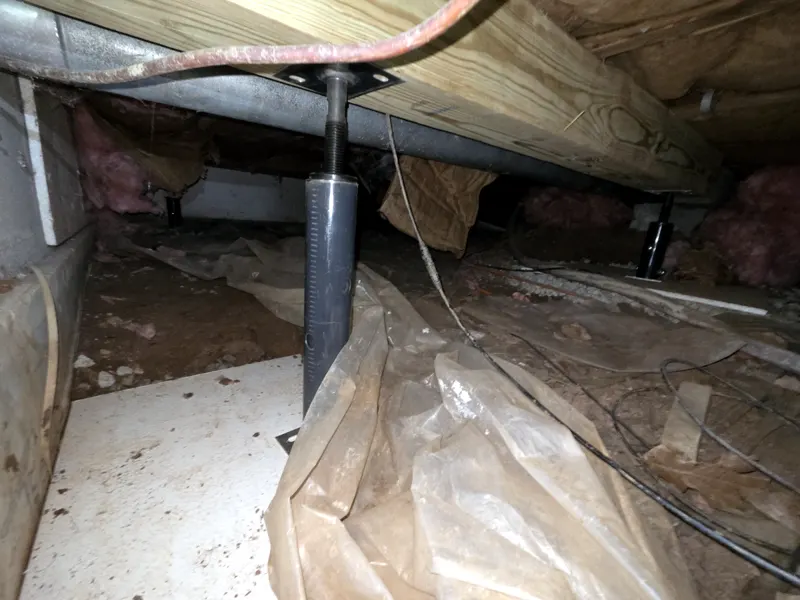
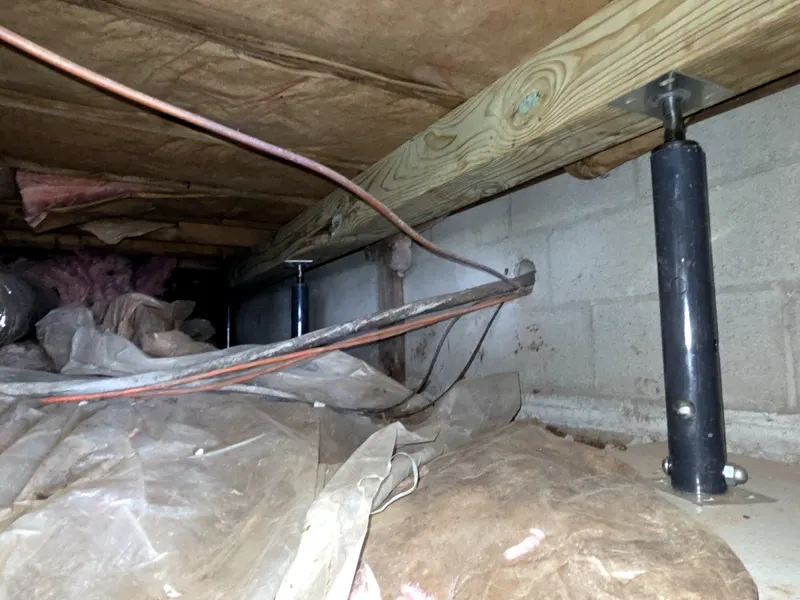
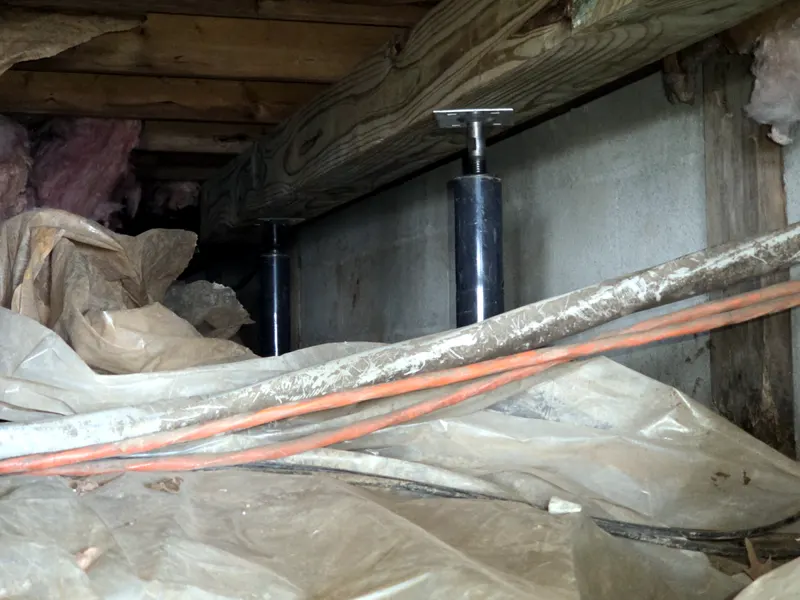
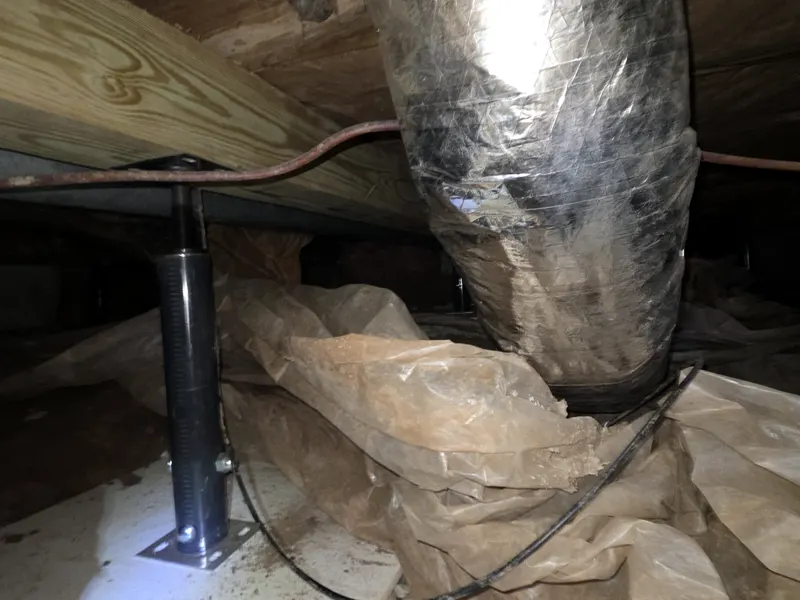
Many older crawl spaces have too few supports, or supports sitting on loose block, wood, or bare soil. We install adjustable steel support columns on proper bearing and, where needed, new beams, to carry the floor and take out sag gradually. The photos on this page are crawl spaces where we installed adjustable steel supports under the existing beams.
Sill plate and rim joist repair
The sill plate sits on top of the foundation wall and the rim joist wraps the edge of the floor framing. Because they’re close to the ground and the outside of the house, they’re exposed to moisture and insects. When they rot, the house above can settle at the walls. We replace or reinforce damaged sections while supporting the structure.
Why crawl spaces around Charleston need attention
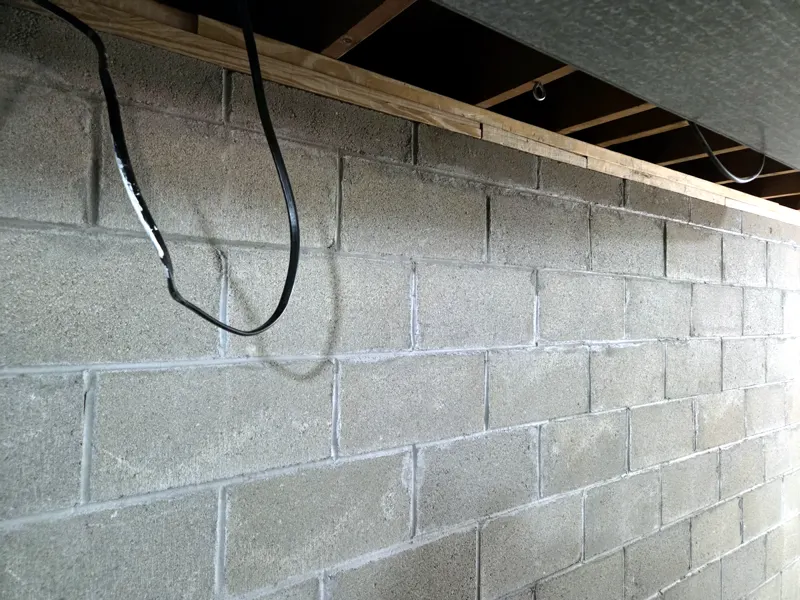
A lot of homes in the Kanawha Valley are older houses built over crawl spaces on block piers or perimeter walls. Over decades, original posts settle, wood takes on moisture from damp soil, and framing that was fine for the original layout gets overloaded by remodels. Hillside lots can also put one side of a crawl space closer to grade and runoff than the other.
Common causes we find
- Original wood posts or stacked block supports that have settled or shifted
- Beams spanning too far between supports
- Joists cut or notched for plumbing, ductwork, or wiring
- Damaged sill plates or rim joists where water or insects got in
- Added loads from remodels, such as moved walls, heavier finishes, or new appliances
What to expect
We start by inspecting the crawl space and the floors above. Then we explain what’s causing the sag or bounce and what we recommend. Adjustable supports let the floor be brought up gradually rather than all at once.
Related services
Other ways we can help
Questions
Frequently asked questions
Can sagging floors be leveled?
Often they can be improved. Adjustable steel supports let the floor be raised gradually. How far depends on the house, the framing and finishes above, which we’ll talk through after the inspection.
Do I need new beams or just more posts?
It depends on the beam’s size, condition, and span. Sometimes added supports are enough. Sometimes the beam needs to be reinforced or replaced.
Do you work in tight crawl spaces?
Yes. Most crawl space repairs are done from inside the crawl space without disturbing the living space above.
Got a big, scary quote? Get a free second opinion.
An honest engineering review led by Joe Saunders, PE, at no charge and with no obligation.
Request a free inspection
Tell us what you’re seeing and we’ll follow up to set up a visit. Photos of the cracks or problem areas help.
- Free inspection and second opinion
- Led by Joe Saunders, PE
- No pressure, no obligation
Prefer to talk? Call or text 304-767-8623 or email info@mcawva.com.