
Exterior drainage & French drains
Exterior Drainage and French Drain Installation
Water is behind most foundation problems. We install French drains and exterior drainage that carry water away from your foundation before it can push on the walls.
- Led by Joe Saunders, PE
- Free inspections
- Kanawha, Putnam & nearby counties
Warning signs
Signs you have a drainage problem
- Water pooling next to the foundation after rain
- Downspouts that empty right at the wall
- Soil sloping toward the house
- Wet basement walls or a damp crawl space after storms
- Washed-out soil or mulch along the foundation
- Cracking on the uphill side of a hillside home
French drain installation
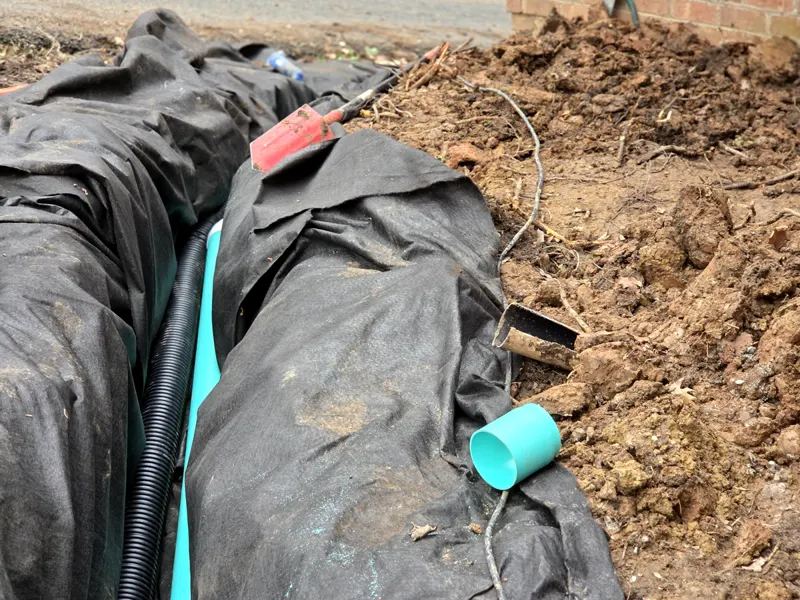
A French drain is a trench with perforated pipe set in gravel. It collects water from the soil and carries it to a place where it can drain away from the house. We install French drains along foundations, at the base of slopes, and in low spots where water collects.
Placement, depth, and where the water goes are decided by your lot: where the water comes from, where it can be released, and the slope available to get it there.
Other exterior drainage work
- Perimeter drainage along the foundation
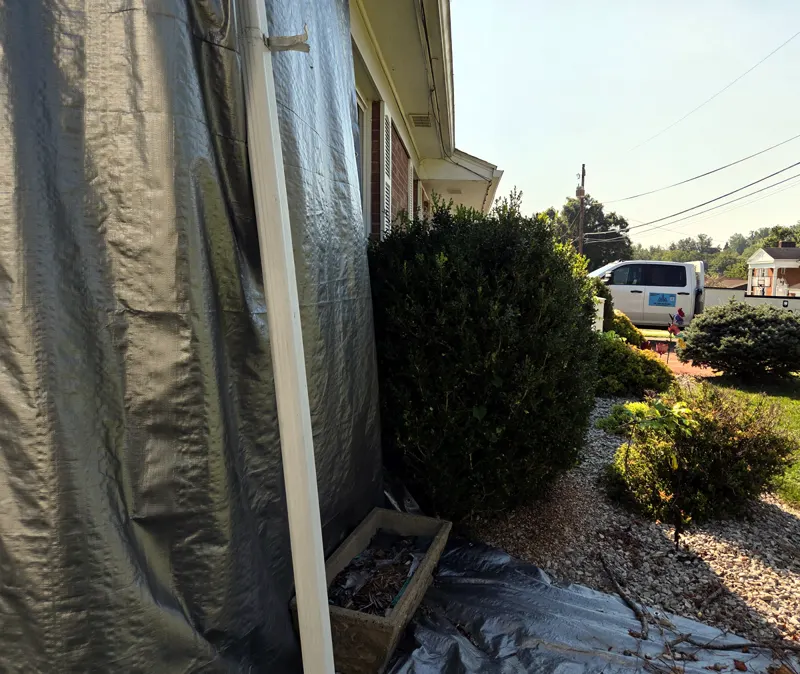
- Downspout extensions and buried downspout drain lines
- Grading and slope correction to direct water away from foundation walls
- Drainage at the base of hillsides and retaining areas
How drainage protects your foundation
Saturated soil is heavy, and clay soil swells when wet. Both push on basement and crawl space walls. Water soaking the soil under footings can also soften it and lead to settlement. Moving water away from the house reduces that pressure, which is why drainage is often part of a long-term foundation repair.
Built for local slopes and soils
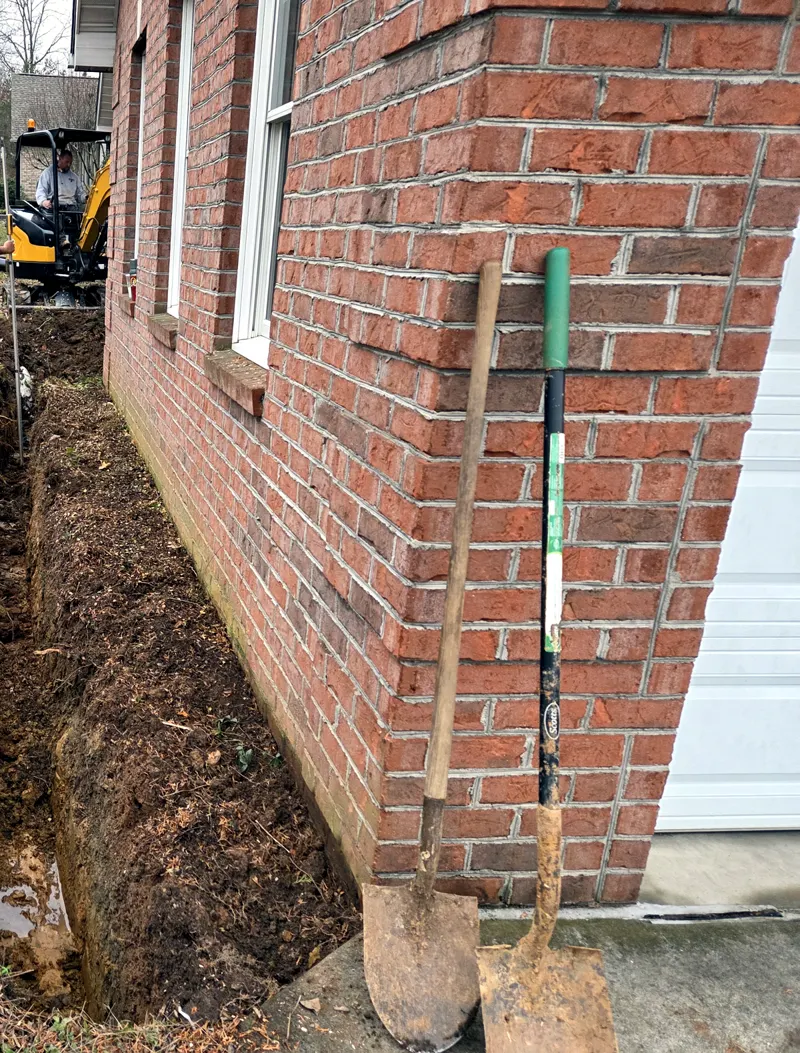
Hillside lots are common around Charleston, Cross Lanes, and Hurricane, and many homes sit with one side cut into a slope. Runoff from above heads straight for the uphill wall. Our drainage plans are tailored to the soil and slope conditions of Charleston and Kanawha County, including where water can be safely discharged.
Simple things you can check
Walk around the house during a heavy rain. Watch where gutters overflow, where downspouts empty, and where water runs or pools. Look for soil that slopes toward the house instead of away from it, and for mulch beds or patios that hold water against the foundation. Notes and photos from a storm help us design the right fix.
What the process looks like
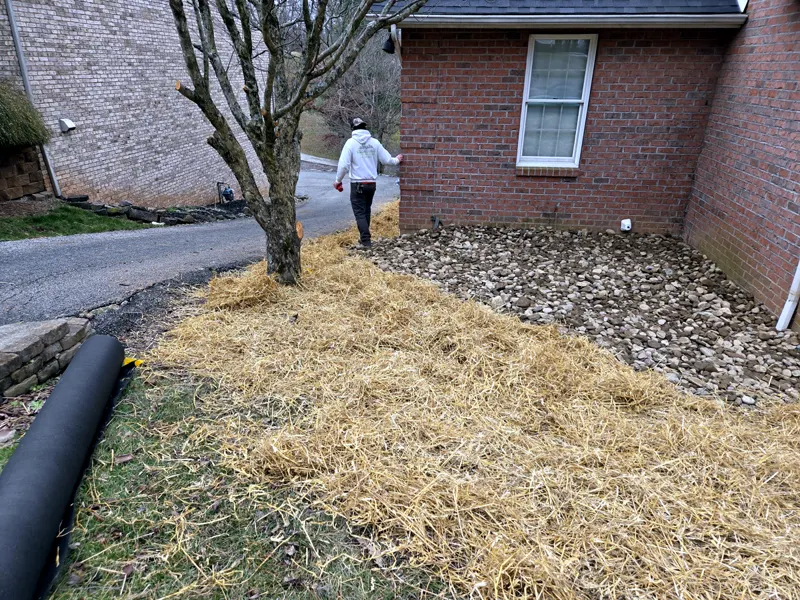
We look at the lot, downspouts, grading, and the foundation itself, and explain where water is coming from and where it should go. Then we lay out the drain route and do the excavation, pipe, gravel, and backfill. Lawn and landscaping disturbed by the work is part of the conversation before we start.
Related services
Other ways we can help
Questions
Frequently asked questions
What’s the difference between a French drain and a downspout line?
A downspout line carries roof water from your gutters away from the house in solid pipe. A French drain collects groundwater and surface water from the soil through perforated pipe. Many homes need both.
Will a French drain fix a cracked wall?
It takes pressure off the wall and helps prevent new damage, but a wall that has already cracked or bowed may also need repair. We’ll tell you which you need.
Do you handle drainage on hillside lots?
Yes. Hillside drainage is common in our area, and the plan depends on your slope and where water can be released.
Got a big, scary quote? Get a free second opinion.
An honest engineering review led by Joe Saunders, PE, at no charge and with no obligation.
Request a free inspection
Tell us what you’re seeing and we’ll follow up to set up a visit. Photos of the cracks or problem areas help.
- Free inspection and second opinion
- Led by Joe Saunders, PE
- No pressure, no obligation
Prefer to talk? Call or text 304-767-8623 or email info@mcawva.com.